EUDR Competent Authorities and Penalties in Each EU Country
Who enforces the EUDR in each of the 27 EU countries, the language it works in, and the penalties its national law sets so far, each linked to its source.

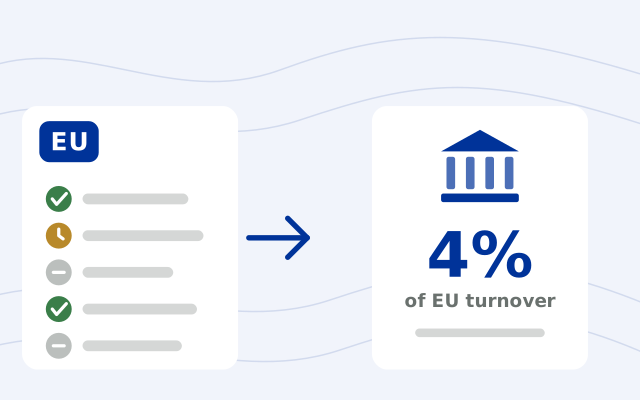
Each EU country names its own EUDR competent authority and sets its own penalties, which must provide at least what the regulation's Article 25 requires: for a company, a maximum fine of at least 4% of its EU turnover, plus confiscation and exclusion from public contracts. As of 2 November 2026, 7 of the 27 countries have adopted a penalties law (3 confirmed in force), 3 have a bill in parliament and 17 have neither, before the rules start to apply on 30 December 2026. The Commission's list names no authority for Greece, Malta or Poland.
Since 15 October 2026, the information system sends a due diligence statement to the competent authorities of the country where the operator is established, or, for an operator outside the EU, of the country its identifier in the system is linked to. For how to file one, see filing the statement in TRACES.
Checked 2 November 2026: each authority against the Commission's list of competent authorities, updated on 12 October 2026, and each penalty against the national law, bill or authority page linked in its country's section below. EU sources © European Union, summarised by us under
CC BY 4.0. A plain-language summary, not legal advice.
Who enforces the EUDR in each country, and with what penalties?
| Country | Authority | Language | Penalties law | Top fine for a company |
|---|---|---|---|---|
| Austria | Federal Forest Office; Agrarmarkt Austria | German | No | None |
| Belgium | Federal Public Service Health, Food Chain Safety and Environment | Dutch, French, German; English page | Yes, when the EUDR does | €4 million, before surcharges; cattle and exports left out |
| Bulgaria | Food Safety Agency; Executive Forest Agency | Bulgarian | No | None |
| Croatia | Agency for Agriculture and Food (HAPIH) | Croatian | Yes, in force | 4% of EU turnover |
| Cyprus | Department of Forests | Greek | No | None |
| Czechia | Czech Forestry Institute (NLI) | Czech | Yes, in force | CZK 10 million, or 4% of EU turnover, CZK 10 million for a repeat within 12 months |
| Denmark | Agency for Green Transition and Aquatic Environment | Danish | Yes, in force | No fixed maximum |
| Estonia | Environmental Board | Estonian | Pending: bill | €40 million, or 4% of turnover or 3 times the gain, €40 million for a significant quantity; Article 3 breaches only, in the bill |
| Finland | Finnish Food Authority | Finnish, Swedish; English page | Pending: bill | 4% of EU turnover, in the bill |
| France | Ecological transition and agriculture ministries | French; English page | No | None |
| Germany | Federal Office for Agriculture and Food (BLE) | German | Pending: bill | €10 million, or 4% of EU turnover, €10 million where a manager commits the Article 3 crime; the 4% for administrative offences, for companies with over €2.5 million EU turnover, in the bill |
| Greece | Not listed | Greek | No | None |
| Hungary | National Food Chain Safety Office (Nébih) | Hungarian | No | None |
| Ireland | Department of Agriculture, Food and the Marine | English | No, draft only | €10 million, 4% of EU turnover or the gain, whichever is greatest, in the outline |
| Italy | Agriculture ministry (MASAF) | Italian | No | None |
| Latvia | State Forest Service; Rural Support Service | Latvian | No | None |
| Lithuania | Environmental Protection Department; Food and Veterinary Service; Consumer Rights Protection Authority | Lithuanian | Yes, adopted, start date not confirmed | No company fine found, managers up to €6,000 for a repeat |
| Luxembourg | Environment ministry | French, German | No | None |
| Malta | Not listed | Maltese, English | No | None |
| Netherlands | Food and Consumer Product Safety Authority (NVWA) | Dutch; English page | Yes, adopted, not yet in force | €1.1 million, or 10% of annual turnover, the 10% where €1.1 million isn't enough |
| Poland | Not listed | Polish | No, draft only | 6% of EU turnover, in the draft |
| Portugal | Institute for Nature Conservation and Forests (ICNF); DGAV | Portuguese | No | None |
| Romania | ANSVSA; National Forest Guard; National Environmental Guard | Romanian | No | None |
| Slovakia | Slovak Forestry and Timber Inspectorate | Slovak | Yes, from 30 December 2026 | 4% of turnover, for products that aren't deforestation-free |
| Slovenia | Agency for Agricultural Markets and Rural Development (ARSKTRP) | Slovenian | No | None |
| Spain | Directorate-General for Biodiversity, Forests and Desertification, with regional authorities | Spanish | No, draft only | 4% of EU turnover, for very serious breaches, in the draft |
| Sweden | Swedish Forest Agency | Swedish; English page | No, proposal only | SEK 1 million, or 4% of EU turnover, the 4% for serious repeat breaches, in the proposal |
Language is the one the authority works in, with "English page" where it publishes its EUDR information in English too. Penalties law "Yes" means adopted; "Pending", a bill before parliament; "No", nothing adopted or before parliament, even where a draft exists. The top fine is the highest one the law, bill or draft sets for a company. Slovenia's authority changed on 15 October 2026, after the Commission's list.
To look up one country, with its law and penalties in full, use the  EUDR penalties by country lookup.
What penalties does the EUDR require?
The regulation sets what every country's penalties must include; each country sets the amounts, whether a breach is administrative or criminal, and who decides.
Regulation (EU) 2023/1115
of the European Parliament and of the Council of 31 May 2023
Penalties every EU country must provide for
Article 25(2)(a)
Fines
Proportionate to the environmental damage and the value of the products. For a company, the maximum is at least 4% of its total annual EU turnover.
Article 25(2)(b)
Confiscation of the products
The products concerned can be taken from the operator or trader.
Article 25(2)(c)
Confiscation of the revenue
The revenue from a transaction with the products can be taken too.
Article 25(2)(d)
Exclusion from public money
Up to 12 months out of public procurement and public funding, including grants and concessions.
Article 25(2)(e)
Market ban
For serious or repeated breaches, a temporary ban on placing the products on the market, selling them or exporting them.
Article 25(2)(f)
No simplified due diligence
For serious or repeated breaches, the company loses the right to use simplified due diligence.
Summarised from the regulation’s consolidated text of 18 September 2026 on EUR-Lex, not quoted. The scroll beside each one opens its words there.
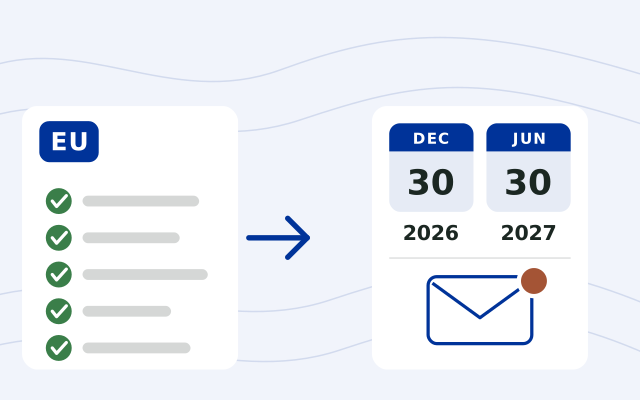
The obligations apply in every EU country from 30 December 2026, whether or not its penalties law is ready; for operators that were natural persons or micro or small companies by 31 December 2024, from 30 June 2027, except for products the EU Timber Regulation already covered (Article 38(3)). The penalties are the part each country has to write into its own law (Article 25(1)).
What does each country's law say?
Austria
- Authority: the Federal Forest Office (Bundesamt für Wald, BFW) and Agrarmarkt Austria (AMA). Neither says how they split the work.
- EUDR page:
bundesamt-wald.at, in German. AMA has none.
- Penalties law: none found. Austria's Timber Trade Monitoring Act (Holzhandelsüberwachungsgesetz) still covers only the EU Timber Regulation, and the federal law database lists no act on the EUDR.
Belgium
- Authority: the Federal Public Service Health, Food Chain Safety and Environment, through its Federal Environmental Inspection Service.
- EUDR page:
health.belgium.be, in Dutch, French, German and English.
- Penalties law: the
Law of 3 May 2024 adds breaches of Articles 3, 4 and 9 to 13 of the EUDR to the 1998 Product Standards Law. The offence applies when the EUDR does: from 30 December 2026, or 30 June 2027 for micro and small operators established by 31 December 2024, except for products already covered by the EU Timber Regulation. It leaves out cattle and exports, which are regional matters, and we found no regional rules for them.
- Penalties: criminal, under Article 17 of the 1998 law (
coordinated text, annexed to the bill): 8 days to 3 years in prison, a fine of €160 to €4,000,000, or both, before the surcharge Belgian law adds to criminal fines. The law sets no fine based on turnover. Seized products can be sold, donated or destroyed.
Bulgaria
- Authority: the Bulgarian Food Safety Agency for cattle, cocoa, coffee, palm oil and soya; the Executive Forest Agency for wood. The Commission's list names none for rubber.
- EUDR page: the Executive Forest Agency's
iag.bg, in Bulgarian. The Food Safety Agency has none.
- Penalties law: none found. The
Croatia
- Authority: the Commission's list names the Croatian Agency for Agriculture and Food (HAPIH) as coordinator, with the agriculture and environment ministries. The national law names HAPIH, the Customs Administration and the State Inspectorate, each for its own products.
- EUDR page:
hapih.hr/cdd, in Croatian.
- Penalties law: the
Act implementing Regulation (EU) 2023/1115, Official Gazette 151/2025, in force since 23 December 2025.
- Penalties: for a company, 1% to 4% of its EU turnover in the previous financial year, and €1,000 to €5,000 for the person responsible in it; €500 to €2,000 for a natural person. Misdemeanours, with no prison term. The other Article 25 penalties can be added, and public buyers and funders must exclude sanctioned operators.
Cyprus
- Authority: the Department of Forests.
- EUDR page: none. The Department's
timber regulation page, in Greek, attaches the EUDR's text.
- Penalties law: none found. The
Timber Trade Control Law of 2013 covers only the EU Timber Regulation.
Czechia
- Authority: the Czech Forestry Institute (NLI). The national law adds the agriculture and food, veterinary, trade, public health and environmental inspectorates, each for its own products.
- EUDR page:
nli.gov.cz, in Czech.
- Penalties law:
Act 251/2025, which amends the timber act 226/2013, in force since 1 January 2026.
- Penalties: administrative: up to CZK 5 million for placing, making available or exporting products in breach of Article 3, doubled for a repeat within 12 months, or up to 4% of EU turnover for a company; up to CZK 500,000 for due diligence failures. No prison term. Confiscation of products and revenue, up to 12 months' exclusion from public contracts and funding, temporary bans and a ban on simplified due diligence.
Denmark
- Authority: the Agency for Green Transition and Aquatic Environment (SGAV).
- EUDR page:
sgavmst.dk, in Danish.
- Penalties law:
Executive Order 1440 of 20 November 2025, made under the Nature Protection Act, in force since 1 January 2026.
- Penalties: criminal: fines set by a court, with no fixed maximum, that take the economic gain into account; up to 1 year in prison for an intentional or grossly negligent breach that caused harm or sought a gain. Courts can confiscate products and revenue, and exclude a company from public contracts and funding for up to 12 months.
Estonia
- Authority: the Environmental Board (Keskkonnaamet), on the Commission's list. The Ministry of Climate's page adds the Agriculture and Food Board for cattle, soya, coffee, cocoa and palm oil, and leaves wood and rubber to the Environmental Board.
- EUDR page: the Ministry of Climate's
kliimaministeerium.ee, in Estonian.
- Penalties law: a bill,
934 SE, amends the Penal Code; it passed its first reading in the Riigikogu. It covers only the Article 3 prohibition, not due diligence or reporting.
- Penalties in the bill: for a company, up to 4% of its annual turnover or three times the gain; for a significant quantity, a criminal fine of up to €40 million under the Penal Code (§ 44(8)), no less than that 4% fine. Up to 5 years in prison for a significant quantity, and up to 8 years where it causes lasting damage to the environment.
Finland
- Authority: the Finnish Food Authority (Ruokavirasto).
- EUDR page:
ruokavirasto.fi, in Finnish and Swedish, with an English page.
- Penalties law:
Government bill HE 236/2026, before Parliament's Agriculture and Forestry Committee since 15 October 2026, meant to apply from 30 December 2026.
- Penalties in the bill: administrative: up to 4% of EU turnover for a company, €500 to €5,000 for a natural person, and fixed fees of €300 to €3,000 for lesser breaches. Every penalty payment brings 6 months' exclusion from public contracts and funding. A separate bill, HE 157/2026, would add the crime.
France
- Authority: two ministries acting together: the ecological transition ministry, through its General Commission for Sustainable Development (CGDD), and the agriculture ministry, through its DGPE.
- EUDR page:
deforestationimportee.ecologie.gouv.fr, in French, with an English page.
- Penalties law: none found, adopted or before Parliament. A
Senate report of 21 January 2026 lists the EUDR among EU texts that still need national legislation.
Germany
- Authority: the Federal Office for Agriculture and Food (BLE), on the Commission's list. The bill would give the federal states German farms and German-harvested timber.
- EUDR page:
ble.de, in German.
- Penalties law: a government bill,
Bundestag printed paper 21/8278, had its first reading on 8 October 2026 and is meant to apply from 30 December 2026.
- Penalties in the bill: fines up to €100,000, or up to 4% of EU turnover for companies above set turnover levels; up to 5 years in prison for placing products in breach of Article 3, and up to 10 years where it causes lasting, serious damage to an ecosystem, a protected habitat, water, soil or air. A company whose manager commits the crime can be fined up to €10 million under general law (
OWiG § 30). Confiscation, and up to a year's exclusion from public contracts and funding or ban on trading the products.
Greece
- Authority: none on the Commission's list, and we found no Greek act or ministry page that names one.
- EUDR page: none found.
- Penalties law: none found.
Hungary
- Authority: the National Food Chain Safety Office (Nébih), named in
Government Decree 383/2016, as amended by Decree 351/2024.
- EUDR page:
portal.nebih.gov.hu, in Hungarian. Its key facts sheet names kinds of penalty but no amounts.
- Penalties law: none found for fines. The
Ireland
- Authority: the Department of Agriculture, Food and the Marine.
- EUDR page:
gov.ie, in English.
- Penalties law: none yet. On 17 July 2026 the government agreed to draft a bill from the
General Scheme of the Deforestation and Forest Degradation Bill 2026, an outline that comes before a bill. No bill is before the Oireachtas.
- Penalties in the outline: criminal: on indictment, up to 3 years in prison and a fine of up to €10 million, 4% of EU turnover or the economic gain, whichever is greatest. Courts could order forfeiture of products and revenue, up to 12 months' exclusion from public contracts and funding, and bans.
Italy
- Authority: the agriculture ministry (MASAF): its forests directorate for wood, and its food fraud inspectorate (ICQRF) for the other commodities.
- EUDR page:
masaf.gov.it, in Italian.
- Penalties law: none found. The
European delegation law 2024 (Law 91/2025, Article 26) gave the government until about January 2026 to adopt a decree, with administrative fines in proportion to the damage and the value of the goods, confiscation and bans. We found no decree.
Latvia
- Authority: the State Forest Service for wood, and the Rural Support Service for the other commodities.
- EUDR page: the agriculture ministry's
zm.gov.lv, in Latvian.
- Penalties law: none found. The
Forest Law doesn't mention the EUDR, and we found no bill.
Lithuania
- Authority: three: the Environmental Protection Department for timber (codes 4401 and 4403); the State Food and Veterinary Service for cattle, cocoa, coffee, palm oil and soya used as food or feed; and the State Consumer Rights Protection Authority for everything else.
- EUDR page: we couldn't open the authorities' websites.
- Penalties law: Law XV-732 of 23 December 2025, published on 30 December 2025, added Article 270² to the
Code of Administrative Offences. The official register blocked us, so we read the article on a copy of the code and couldn't confirm when it applies.
- Penalties: administrative fines on people and company managers, not on companies: up to €4,000 for a manager whose company places, makes available or exports products in breach of Article 3, and €6,000 for a repeat, with confiscation of the revenue. We found no fine based on turnover.
Luxembourg
- Authority: the Ministry of the Environment, Climate and Biodiversity, which coordinates. Since April 2026, a
law also gives the veterinary and food administration (ALVA) EUDR checks within its remit.
- EUDR page:
environnement.public.lu, in French and German. Its page on planned checks names kinds of penalty but no amounts.
- Penalties law: none found. The
2012 law on the EU Timber Regulation hasn't been extended to the EUDR. An interministerial committee, set up in July 2025, is to set standard procedures for Article 25 penalties.
Malta
- Authority: none on the Commission's list, and none named in Maltese law. The Environment and Resources Authority (ERA) is the authority for the EU Timber Regulation.
- EUDR page: none found.
- Penalties law: none found. Malta's
timber regulations, amended in 2025, cover only the EU Timber Regulation.
Netherlands
- Authority: the Netherlands Food and Consumer Product Safety Authority (NVWA), with Customs at the border.
- EUDR page:
nvwa.nl, in Dutch, with an English page.
- Penalties law: the
Act implementing the EUDR of 17 July 2024 and its decree of 13 January 2025, adopted but not yet in force: a royal decree will set the date. The minister has written that they must be in force by 30 December 2026 (parliamentary paper 36 518, no. 17).
- Penalties: criminal, under the
Economic Offences Act: up to 6 years in prison or a fine for an intentional breach. A court can fine a company up to €1,100,000, or 10% of its annual turnover where that isn't enough (Penal Code, Article 23). No administrative fine yet. The law adds up to 12 months' exclusion from public contracts and subsidies, temporary bans and confiscation.
Poland
- Authority: none on the Commission's list. The government's
draft law proposes three: veterinary officers for cattle; the Agricultural and Food Quality Inspection (IJHARS) for cocoa, coffee, palm oil and soya; and the Inspection for Environmental Protection for wood and rubber.
- EUDR page: the agriculture ministry's
gov.pl page and IJHARS, in Polish.
- Penalties law: none adopted. The draft, UC101, has been with the Council of Ministers' standing committee since October 2026 and hasn't reached the Sejm.
- Penalties in the draft of 21 September 2026: administrative fines of up to 4% of EU turnover, and court fines of 4% to 6% of EU turnover for a company; forfeiture of products, temporary bans, and exclusion from public contracts and funding.
Portugal
- Authority: the Institute for Nature Conservation and Forests (ICNF) and the food and veterinary directorate (DGAV).
- EUDR page: ICNF's
icnf.pt, in Portuguese.
- Penalties law: none found.
Decree-Law 76/2013, on the EU Timber Regulation, is still the only one.
Romania
- Authority: the National Sanitary Veterinary and Food Safety Authority (ANSVSA), the National Forest Guard and the National Environmental Guard.
- EUDR page: none found.
- Penalties law: none found. The Forest Code of 2024 (Law 331/2024) mentions only the EU Timber Regulation.
Slovakia
- Authority: the Slovak Forestry and Timber Inspectorate. The national law adds the agriculture ministry, for oversight and appeals, and the defence ministry, for military areas.
- EUDR page:
mpsr.sk, in Slovak.
- Penalties law:
Act 81/2025, adopted on 27 March 2025. Act 416/2025 moved its EUDR penalties a year later, to 30 December 2026.
- Penalties: administrative: up to 4% of total annual turnover for a company of any size that places, makes available or exports products that aren't deforestation-free (Article 3(a)); for a person, or where turnover can't be set, €500 to €50,000, or €200 to €25,000 for small and medium businesses. Other breaches carry fines in set ranges: €300 to €4,000 for a large company, including for products not produced legally (Article 3(b)), and €500 to €10,000 for not submitting a due diligence statement. No prison term; confiscation, exclusion and bans apply through Article 25.
Slovenia
- Authority: the Commission's list names the Administration for Food Safety, Veterinary Sector and Plant Protection (UVHVVR). A
government decision of 15 October 2026, three days after that list, names the Agency for Agricultural Markets and Rural Development (ARSKTRP) instead.
- EUDR page:
- Penalties law: none found. The
Forest Act amendment of November 2025 raised fines only under the EU Timber Regulation.
Spain
- Authority: the Directorate-General for Biodiversity, Forests and Desertification of the ecological transition ministry (MITECO), with an authority in each autonomous community (
list).
- EUDR page:
- Penalties law: none adopted. The government's
- Penalties in the 2024 draft: €200,001 up to 4% of EU turnover for very serious breaches.
Sweden
- Authority: the Swedish Forest Agency (Skogsstyrelsen).
- EUDR page:
skogsstyrelsen.se, in Swedish, with an English page.
- Penalties law: none adopted. A government inquiry,
SOU 2025:17, has proposed one. No bill has reached the Riksdag; the government
- Penalties in the inquiry’s proposal: fees of SEK 1,000 to SEK 1 million, or up to 4% of EU turnover for more serious and repeated breaches; up to 2 years in prison for breaching Article 3, and up to 8 years for a gross offence.
Where does national law differ from the Commission's list?
The Commission's list is what each country notified. National law or a later decision sometimes names more, or other, authorities:
- Slovenia: a government decision of 15 October 2026 names the Agency for Agricultural Markets and Rural Development instead of the food safety administration.
- Croatia and Czechia: Croatia's law adds customs and the State Inspectorate, and Czechia's the product inspectorates, each for its own products.
- Estonia: the Ministry of Climate gives cattle, soya, coffee, cocoa and palm oil to the Agriculture and Food Board.
- Luxembourg: a law of April 2026 gives the veterinary and food administration EUDR checks.
- Germany and Poland: their bills would add the federal states, for German farms and timber (Germany), and three inspectorates (Poland).
The list also names two authorities for Northern Ireland: the Office for Product Safety and Standards for wood and rubber, and the Department of Agriculture, Environment and Rural Affairs for palm oil, soya, cocoa, cattle and coffee.
What do the penalties mean for exporters outside the EU?
They fall on the companies that place products on the EU market, make them available there or export them from it, mostly importers and traders in the EU. A producer or exporter abroad is caught only if it places the products on the EU market itself. What reaches you is your buyer's due diligence: the geolocation of each plot, and information showing the product is deforestation-free and legal. Where its country's law is in place, a buyer can face high fines, and prison in some countries, so it has every reason to ask before it buys. What to have ready is in EUDR for exporters, and buyers' own deforestation- and conversion-free pledges, which can ask more than the law, are in DCF commitments vs the EUDR.
How do we keep this page current?
This page is the state of each country's law on 2 November 2026, and it is moving: bills in Germany, Finland and Estonia could pass before 30 December. If your country's law or authority has changed, write to us at info@restorationscope.com. Changes to the EUDR itself are in what changed in the EUDR, and the dates that apply now in the EUDR delay checker.
Disclosure: Restoration Scope publishes this page. We make field and plot software that exporters and cooperatives use to keep plot data for the EUDR. No authority or government named here paid for or reviewed it.
Learn everything about the EUDR
From what the regulation asks to mapping plots, tracing lots and reviewing the evidence, in the order teams need it.
Understand the rule
- What is the EUDR?
- EUDR for EU importers
- EUDR for smallholder farmers
- EUDR competent authorities and penaltiesYou’re reading this
- What changed in the EUDR
- Free toolEUDR scope checker
- Free toolEUDR HS code and country lookup
- Free toolEUDR delay checker
Questions about EUDR authorities and penalties
Who enforces the EUDR?
The competent authority each EU country designates under Article 14(1) of the regulation. It runs risk-based checks on operators, downstream operators and traders in its country, and can seize products and order corrections. Depending on the country, it or a court imposes the penalties national law sets. The Commission publishes the list of competent authorities; its update of 12 October 2026 has no authority for Greece, Malta or Poland.
What are the penalties for breaching the EUDR?
Each EU country sets them in its own law, which must provide at least what Article 25 requires: for a company, a maximum fine of at least 4% of its EU turnover, confiscation of the products and the revenue from them, up to 12 months' exclusion from public contracts and funding, and, for serious or repeated breaches, temporary bans on trading the products and a ban on simplified due diligence. As of 2 November 2026, 7 of the 27 countries have adopted a penalties law, and 3 of those are confirmed in force; we found no fine based on turnover in Belgium's or Lithuania's, and Denmark's sets no maximum.
Can you go to prison for breaching the EUDR?
The EUDR sets no prison term, but national law can. Denmark's order allows up to 1 year for an intentional or grossly negligent breach that caused harm or sought a gain. Belgium's law allows up to 3 years from 30 December 2026. The Netherlands' Economic Offences Act allows up to 6 years for an intentional breach, once the Dutch EUDR act is in force. Bills in Germany, Estonia and Finland, Ireland's outline of a bill and a Swedish inquiry's proposal would add prison terms too.
Which authority receives my due diligence statement?
Since 15 October 2026, the EU information system sends each statement to the competent authorities of the EU country where the operator is established; for an operator outside the EU, the country its identifier in the system is linked to (Implementing Regulation (EU) 2026/1565, Article 1, point (2)(c)). How to file one: filing the statement in TRACES.
What happens if a country has no penalties law by 30 December 2026?
The EUDR's obligations still apply there from 30 December 2026: it is a regulation, so it applies directly in every EU country. Operators that were natural persons or micro or small companies by 31 December 2024 start on 30 June 2027, except for products the EU Timber Regulation already covered (Article 38(3)). Penalties are the part each country must set in its own law (Article 25(1)). As of 2 November 2026, we found no penalties law adopted in 20 countries.
Another question? Email us or book a call.
Based on the official EU texts. See our EUDR sources, with the version we follow and the day we last checked each one.